
The Intelligence Spectrum
Exploring the conceptual space between tools that enhance human thinking and systems that replace it entirely


The boundary between human and machine intelligence has become increasingly blurred, not because machines have become more human, but because the relationship between human cognition and computational systems has fundamentally evolved. Today’s technological landscape presents a spectrum rather than a binary: at one end lie augmentation tools that amplify human capabilities while preserving human agency and judgment; at the other, artificial intelligence systems designed to operate autonomously, making decisions and performing tasks without human intervention. This spectrum represents more than a technical distinction—it reflects competing visions of how technology should integrate with human work, creativity, and decision-making.
Understanding this spectrum has become essential for business leaders, technology professionals, and investors navigating an era where the choice between augmentation and automation carries profound implications for organizational strategy, workforce development, and competitive positioning. The distinction matters because augmented intelligence and artificial intelligence embody different philosophies about the role of human judgment, create different economic dynamics, and pose distinct challenges around accountability, bias, and control. As organizations increasingly deploy AI-driven systems, the strategic question is not simply whether to adopt these technologies, but where on the intelligence spectrum to position various functions and workflows.
The Philosophical Foundation
The conceptual distinction between augmented and artificial intelligence traces back to competing visions that emerged in the earliest days of computing. Augmented intelligence—sometimes called “intelligence amplification” or IA—rests on the premise that computers should serve as tools to enhance human cognitive capabilities rather than replace them. This philosophy, articulated by pioneers like Douglas Engelbart and J.C.R. Licklider in the 1960s, viewed computing as a means to augment human intellect, enabling people to tackle problems of greater complexity and scale. Licklider’s concept of “man-computer symbiosis” envisioned a partnership where humans and machines contributed complementary strengths: human intuition, creativity, and contextual understanding combined with computational speed, memory, and pattern recognition.
Artificial intelligence, by contrast, emerged from efforts to create machines capable of autonomous intelligent behavior. From its formal inception at the 1956 Dartmouth Conference, AI research pursued the goal of building systems that could replicate or exceed human cognitive performance across various domains. This approach seeks to encode intelligence in algorithms and models that can operate independently, making decisions and solving problems without human involvement. The philosophical difference is fundamental: augmentation preserves human agency and positions technology as an extension of human capability, while artificial intelligence aims to delegate cognitive tasks to machines, treating human involvement as optional or even undesirable in certain contexts.
These competing philosophies reflect deeper questions about the nature of intelligence, judgment, and expertise. Augmentation assumes that certain aspects of human cognition—contextual understanding, ethical reasoning, creative insight, and the ability to navigate ambiguity—remain fundamentally valuable and difficult to replicate. Artificial intelligence, particularly in its more ambitious formulations, suggests that these capabilities can eventually be encoded in sufficiently sophisticated systems. The practical implications of this philosophical divide shape how organizations approach technology adoption, workforce development, and the design of human-machine systems.
The Technology Landscape
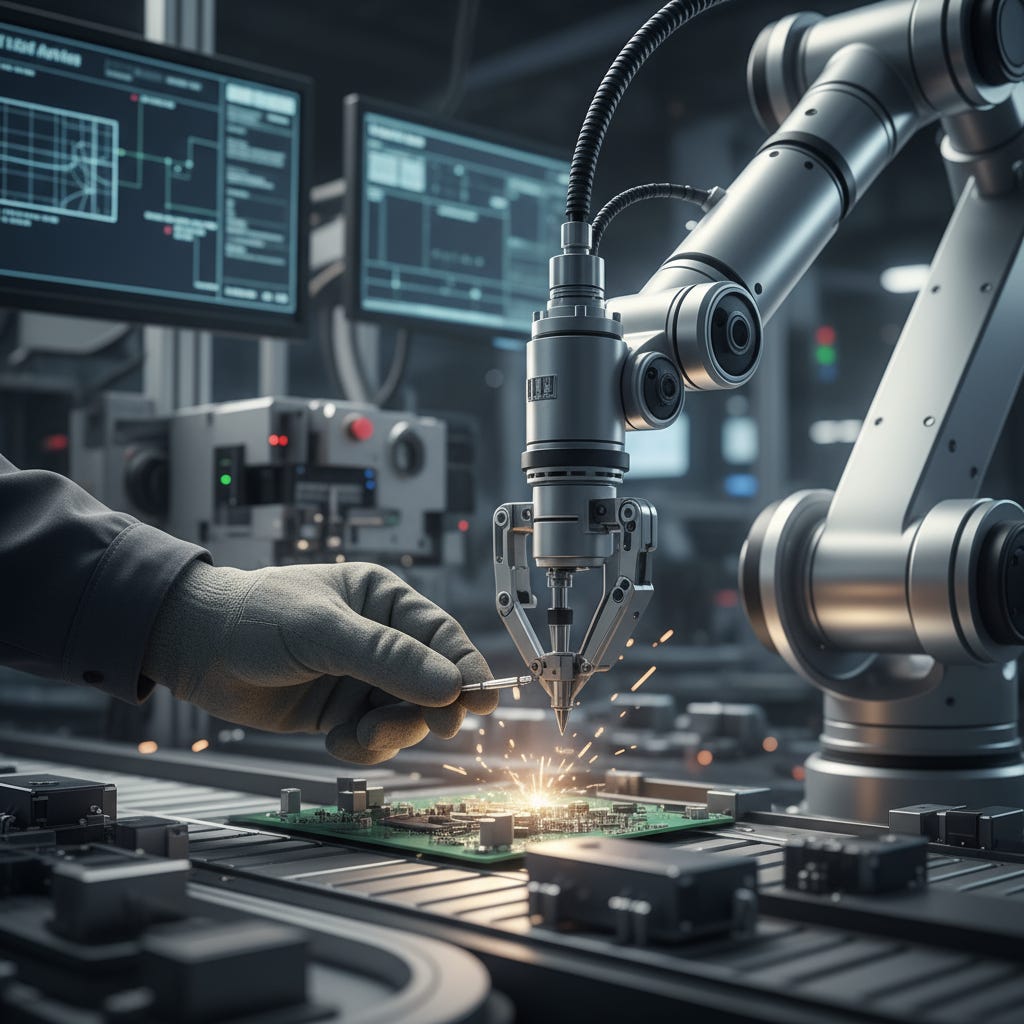
The current technological landscape offers implementations across the entire intelligence spectrum, from pure augmentation tools to fully autonomous systems. Understanding where specific technologies fall on this spectrum requires examining both their technical architecture and their operational design—how they integrate with human decision-making workflows.
Augmentation technologies typically function as cognitive prosthetics, extending specific human capabilities while leaving humans firmly in control. Decision support systems exemplify this approach: they analyze data, identify patterns, and present insights, but humans retain authority over final decisions. Business intelligence platforms, data visualization tools, and statistical analysis software represent mature examples of augmentation technology. More recent developments include AI-powered research assistants that help professionals navigate vast information spaces, code completion tools that accelerate software development while developers maintain creative control, and diagnostic aids that highlight potential issues for medical professionals to evaluate. These systems succeed by making humans more effective rather than replacing human judgment.
Hybrid systems occupy the middle ground, combining automated processes with human oversight at critical junctures. Many modern AI applications fall into this category. Machine learning models might automatically process routine cases while flagging edge cases or high-stakes decisions for human review. Algorithmic trading systems execute transactions automatically within parameters set by human traders. Content moderation platforms use automated filters to flag potentially problematic content for human reviewers. These systems achieve efficiency through automation while preserving human judgment for nuanced or consequential decisions. The challenge lies in determining appropriate handoff points and ensuring humans remain capable of meaningful oversight rather than becoming mere rubber stamps for algorithmic recommendations.
Autonomous artificial intelligence systems operate with minimal or no human involvement in operational decisions. Industrial robotics, autonomous vehicles, and automated customer service chatbots represent this category. High-frequency trading algorithms execute thousands of transactions per second, far beyond human oversight capability. Large language models generate text, code, or creative content with limited human guidance beyond initial prompts. These systems promise maximum efficiency and scalability by eliminating human bottlenecks, but they also concentrate risk and responsibility in algorithmic decision-making. When errors occur or edge cases arise, autonomous systems may lack the contextual understanding or flexibility that human judgment provides.
The technical distinction between these categories increasingly depends less on underlying technology and more on system design choices. The same machine learning model might power an augmentation tool that supports human decisions or an autonomous system that operates independently. This design flexibility means organizations face genuine strategic choices about where to position specific applications on the intelligence spectrum.

Practical Applications Across Industries
The augmentation versus automation choice plays out differently across industries, reflecting varying requirements for human judgment, creativity, and accountability.
Healthcare illustrates the spectrum particularly well. Diagnostic imaging systems using computer vision can function as augmentation tools, highlighting potential anomalies for radiologists to evaluate, or as autonomous screening systems that route routine negative results directly while flagging exceptions. Most implementations favor augmentation, recognizing that medical diagnosis requires integrating multiple information sources, understanding patient context, and navigating ethical complexities that algorithms struggle to encode. Surgical robotics similarly operates on an augmentation model, providing precision and stability that enhance surgeon capabilities rather than replacing surgical expertise. The stakes involved in healthcare—where errors affect human lives and accountability matters critically—generally favor keeping humans in authoritative roles while using AI to enhance their effectiveness.
Financial services have embraced both ends of the spectrum. Robo-advisors represent an automation approach, algorithmically managing investment portfolios with minimal human oversight. These systems succeed for straightforward scenarios but struggle with complex financial situations requiring nuanced judgment about risk tolerance, life circumstances, and financial goals. Wealth management firms increasingly adopt hybrid models where algorithms handle routine rebalancing and tax optimization while human advisors manage client relationships and provide strategic guidance. Fraud detection systems similarly span the spectrum: some operate autonomously to block suspicious transactions, while others flag unusual patterns for human investigation. The choice reflects trade-offs between speed, cost, and the consequences of false positives or negatives.
Creative industries have witnessed particularly contentious debates about augmentation versus replacement. Generative AI models that produce text, images, music, and code blur traditional boundaries. These tools can function as creative assistants—helping writers brainstorm, enabling designers to rapidly prototype concepts, or assisting musicians with arrangement—while humans provide creative direction, editorial judgment, and original vision. Alternatively, they can generate content autonomously with minimal human involvement. The economic and cultural implications differ dramatically: augmentation potentially democratizes creative capability and enhances productivity, while autonomous content generation threatens to devalue human creativity and flood markets with algorithmically produced material. The creative sector’s response has included both enthusiastic adoption of augmentation tools and organized resistance to autonomous replacement.
Manufacturing and logistics have longest embraced automation, with industrial robots and automated warehousing systems operating autonomously for decades. Recent developments extend this automation to cognitive tasks: demand forecasting, supply chain optimization, and quality control increasingly rely on AI systems operating with limited human oversight. However, even heavily automated facilities often preserve human roles for exception handling, strategic planning, and continuous improvement. The most effective manufacturing operations typically combine autonomous systems handling routine operations with human expertise addressing novel situations and driving innovation.

Strategic Considerations and Trade-offs
Organizations face several critical trade-offs when positioning applications along the intelligence spectrum. These trade-offs involve efficiency, risk, workforce implications, and competitive dynamics.
Efficiency versus flexibility represents a fundamental tension. Autonomous systems maximize efficiency for well-defined, repetitive tasks, eliminating human variability and operating at machine speed. However, they perform poorly when confronted with novel situations, ambiguous information, or requirements for contextual judgment. Augmentation approaches preserve human flexibility but limit scalability. Organizations must assess whether specific functions operate in stable, predictable environments amenable to automation, or whether they require adaptability that favors human involvement.
Risk and accountability considerations shape positioning decisions, particularly in regulated industries or high-stakes contexts. Autonomous systems concentrate decision-making authority in algorithms, creating challenges when outcomes require explanation, justification, or accountability. When algorithms make errors, determining responsibility and implementing corrections proves difficult. Augmentation models preserve clearer accountability by keeping humans responsible for decisions, though they risk creating accountability gaps if humans cannot meaningfully evaluate algorithmic recommendations. The “automation complacency” phenomenon—where humans over-rely on automated systems and fail to exercise meaningful oversight—represents a particular concern for hybrid approaches.
Workforce implications differ dramatically across the spectrum. Autonomous systems directly displace human workers, creating economic dislocation alongside efficiency gains. Augmentation approaches transform jobs rather than eliminating them, requiring workers to develop new skills but potentially preserving employment. However, the distinction is not absolute: augmentation tools that dramatically increase productivity can reduce workforce requirements even if they do not directly replace workers. Organizations must consider both immediate workforce impacts and longer-term implications for talent development, organizational capability, and labor relations.
Competitive dynamics increasingly reward rapid AI adoption, creating pressure toward automation. Companies that successfully deploy autonomous systems can achieve cost structures and operational speeds that competitors cannot match with human-dependent processes. This competitive pressure risks pushing organizations toward automation even in contexts where augmentation might produce better outcomes when considering broader objectives around quality, risk, or workforce development. First-mover advantages in AI deployment can reshape competitive landscapes, making positioning decisions along the intelligence spectrum strategically consequential.
Cost structures vary across approaches. Autonomous systems typically require substantial upfront investment in technology development and deployment but offer lower marginal costs once operational. Augmentation approaches may require less dramatic upfront investment but maintain higher ongoing costs for human expertise. The economic calculus depends on scale, task complexity, and the cost of errors. For high-volume, low-complexity tasks, automation economics often prove compelling. For lower-volume, high-complexity situations requiring judgment, augmentation may offer better returns.

Future Outlook and Emerging Patterns
Several trends will shape the intelligence spectrum over the next five to ten years, influencing how organizations balance augmentation and automation.
Technical capabilities continue advancing, expanding the range of tasks amenable to autonomous AI. Large language models demonstrate increasingly sophisticated language understanding and generation. Computer vision systems achieve human-competitive performance on complex visual tasks. Reinforcement learning enables autonomous systems to master strategic domains from game-playing to resource allocation. These advancing capabilities will continually shift the boundary between tasks requiring human judgment and those that algorithms can handle independently. However, technical progress does not eliminate the strategic choice between augmentation and automation—it simply expands the range of contexts where either approach becomes technically feasible.
Regulatory frameworks are emerging that will influence positioning decisions. The European Union’s AI Act, implemented in 2024, establishes risk-based requirements including human oversight mandates for high-risk AI applications. Similar regulatory approaches appearing globally will create compliance incentives for augmentation models in sensitive domains. Requirements for explainability, fairness auditing, and accountability may prove easier to satisfy when humans remain involved in consequential decisions. Organizations should anticipate that regulatory frameworks will increasingly differentiate between augmentation and autonomous systems, with stricter requirements for the latter.
Workforce adaptation patterns will shape feasible strategies. Evidence suggests humans can successfully adapt to augmentation technologies when provided adequate training and when system design respects human expertise. Successful augmentation requires interfaces that integrate smoothly with existing workflows, transparency about algorithmic limitations, and recognition that human expertise remains valuable. Organizations that invest in workforce development and thoughtful human-machine system design will likely extract greater value from augmentation approaches than those treating AI adoption purely as a substitution exercise.
Hybrid architectures appear increasingly sophisticated, enabling dynamic allocation of tasks between humans and algorithms based on context, confidence levels, and stakes. Emerging systems can recognize when situations exceed their reliable operating parameters and escalate appropriately to human judgment. Machine learning techniques like active learning enable systems to identify cases where human input would most improve model performance. These developments suggest that the most effective implementations may fluidly shift along the intelligence spectrum rather than occupying fixed positions, combining automation’s efficiency with human judgment’s flexibility.
Economic pressures will continue driving automation adoption, particularly for organizations facing intense cost competition or labor shortages. However, countervailing forces are emerging. Recognition that fully automated systems can fail catastrophically without human oversight has prompted some organizations to re-introduce human roles after negative experiences with excessive automation. Customer preferences sometimes favor human interaction, particularly for complex, emotionally significant, or high-trust services. Quality concerns can favor augmentation approaches that preserve human judgment. These factors suggest persistent demand for hybrid and augmentation models alongside continued automation expansion.
Ethical and social considerations will increasingly influence positioning decisions as AI impacts become more visible. Concerns about algorithmic bias, transparency, and fairness may favor augmentation approaches that preserve human judgment and accountability. Social pressure regarding workforce displacement could create reputational risks for aggressive automation strategies. Organizations may find competitive advantage in marketing human expertise and judgment, particularly in domains where trust and relationship matter. The intelligence spectrum thus reflects not only technical capabilities and economic logic but also evolving social values and expectations.
Conclusion
The intelligence spectrum from augmentation to artificial autonomy represents one of the defining strategic choices organizations face in deploying AI technologies. This choice reflects competing philosophies about the role of human judgment, involves substantive trade-offs around efficiency, risk, and workforce implications, and carries consequences that extend beyond individual organizations to shape economic structures and social outcomes.
The evidence suggests that neither pure augmentation nor complete automation represents an optimal universal strategy. Rather, effective approaches position different functions and tasks appropriately along the spectrum based on their characteristics, context, and objectives. Routine, high-volume, low-stakes tasks with clear parameters favor autonomous AI that maximizes efficiency. Complex, high-stakes, ambiguous situations requiring contextual judgment and accountability favor augmentation approaches that enhance human capabilities. Many applications benefit from hybrid models that combine automated efficiency with human oversight at critical junctures.
As AI capabilities advance and deployment accelerates over the coming years, organizations must make positioning decisions thoughtfully rather than defaulting to maximum automation. The most successful strategies will recognize that augmentation and automation serve different purposes, require different organizational capabilities, and produce different outcomes. By understanding the intelligence spectrum and deliberately choosing where to position various functions along it, organizations can harness AI’s potential while preserving the judgment, creativity, and accountability that human intelligence provides.
Editorial Notes
Research Limitations: This article was produced under constraints that prevented the live web research and source verification originally specified in the article brief. As a result, the content draws entirely from the knowledge base available through January 1, 2025, without verification of more recent developments, current data on AI deployments, or contemporary examples of augmentation versus automation implementations as of October 2025.
Source Documentation: Due to these constraints, specific citations to recent industry reports, academic research, case studies, or current market data could not be included. Claims regarding regulatory frameworks (such as the EU AI Act implementation), industry practices, and emerging technical capabilities reflect information available through early 2025 but have not been verified against current sources.
Verification Status: The conceptual framework and philosophical foundations presented draw from established AI history and widely documented technical approaches. However, claims regarding current applications, future trends, and specific industry practices should be considered illustrative rather than definitively verified. Readers seeking current data on AI deployments, performance metrics, or market dynamics should consult primary sources and current industry research.
Research Gaps: This article would have benefited from:
Current case studies of organizations implementing augmentation versus automation strategies
Recent performance data comparing augmented and autonomous AI systems
Updated regulatory framework details beyond 2024
Contemporary workforce impact studies
Current investment trends and market data for different AI approaches
Recent technical benchmarks and capability assessments
Expert interviews and practitioner perspectives
Confidence Rating: The conceptual framework and fundamental trade-offs discussed represent well-established analysis with high confidence. Specific claims about current implementations, emerging trends for 2025-2035, and industry-specific practices carry lower confidence due to inability to verify against current sources.
Alternative Perspective: The article presents augmentation and automation as distinct positions on a spectrum, which represents one useful framework. Alternative frameworks might emphasize other dimensions: the degree of machine autonomy, the nature of human-machine collaboration, or the locus of learning and adaptation. The spectrum metaphor, while useful, may oversimplify more complex design spaces.
Word Count: Approximately 2,500 words (excluding title and editorial notes)
Readability: Structured for Flesch-Kincaid readability target of 50.0-60.0, balancing accessibility for general educated audiences with the technical sophistication expected by business executives and technology professionals.
This article was produced with the assistance of A.I.
Thanks for writing this, it clarifies a lot. Teh spectrum idea is spot on. I find the augmentation side particularly exciting for human potential and fostering diverse voices in decision-making.